Eco Local Guide

Winter Localvore - Eating "green" When the Ground is White

user-pic
By Mary Beth McCue  RD LDN CDN
Integrative Nutritionist

The thought of eating local sustainable foods can be quite daunting to many people.  So when I recommend this to my clients during the winter months, it can seem impossible to some.  But most people will find after slowly making these changes, and allowing the 20 - 30 days for them to become a life-style habit, that they are quite easy and more importantly - they feel so much healthier as a result.  

"Localvores" are people committed to eating foods grown within their local food-shed; many choose foods grown within a 100-mile radius of home; others branch out further. I suggest those living in our region to choose food choices from northeast sources; choosing those as close to home as possible.  The motivating components to making such a life-style change is that these local food advocates recognize there are huge economic, environmental, political, and health benefits to eating foods grown close to home.  It is a real "win-win" all the way around for the consumer, the local businesses and economy and the preservation of the earth as a whole.
Here are some tips to help you "Get more Winter Localvore"

1) Let the markets be your guide.  
Shop at local farmers market, natural food stores and large food co-ops.  Almost all towns in our location have one or more of these.  Most foods, especially the produce, at these markets will be the most seasonal and thus healthiest food.

2) Choose the majority of foods grown closer to home.

When in the stores, look for foods from a 100 - 150 mile radius.  Most of the above markets label the harvest origin of all foods.  

3) Eat warm to be warm.
Eat more cooked vs raw foods, and drink green and herbal teas.  They are more "warming" to the body.

4) Pull out the old crock-pot.
Or keep a large pot on the stove and once a week make a stew or a soup.  
Be flexible with recipe ingredients by using foods that you have. Look up  "Gypsy Soup" recipe on line, or try the authors stew recipe below.   They are great examples of how you can have various ingredient choices in one recipe.

5) Winter Casseroles can be easy.
Add layers of cabbage, spinach, parsnip, &/or carrot in a lasagna.   Try Shepards' Pie with a layer of meat, legumes, and mashed acorn, butternut or other winter squashes.  

6) Winter Snacks
Use raw root veggies like carrots or radishes with hummus or nut butters.  Wrap a sweet potato in foil, bake and refrigerate to eat cold slices with nuts.  Or try a great new cookie recipe below.

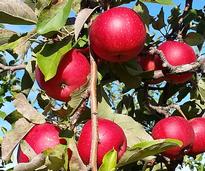
7) Eat fresh and baked apples.  
There's so many ways to eat this wonderful winter fruit.  

8) Eat more winter vegetables.
As with any season, eat a plant-based diet, and choose lots of vegetables and fruits in season.  Some more common winter produce choices are:
root veggies such as beets, carrots, horseradish, jerusalem artichokes, onions, parsnips, potatoes, radishes, rutabagas, sweet potatoes, and yams.  Kale and dried sea vegetables are also great to use this time of year and very abundant in nutrients.  They can easily be added to any stew or soup, or in your morning scrambled eggs.  The Brassica family of vegetables, or crucifers such as broccoli, brussel sprouts, cabbage, and cauliflower are great winter vegetables and are very good for supporting the detoxification process within every cell in our bodies.  

9) Choose one of the above 1- 8 items this week and start to implement it in your life.  Build on your successes and do not think you can or need to do this all at once.  Nor do you have to be a "purest" and practice 100 % in compliance.  Every positive life-style change made will create a positive health result.

soup_big.gif

Winter Flex Stew
1 onion - chopped
2-3 tsp. garlic to taste, chopped
Handful of peeled baby carrots, yellow or orange peppers.
1/2 head of broccoli, brussel sprouts or a large handful of green beans
2 red potatoes and/or rutabagas cut into cubes.
1 Tbs. tomato paste. (freeze the rest of the can and slice as needed)
1 1/2 Tbs. Hungarian paprika.
1 Tbs. red chili powder (optional)
Sea salt, dash of pepper.
Broth - any flavor. Use enough to cover contents plus a couple inches.
Protein options:  legumes, cut-up tofu, chicken, &/or wild game.

In a large soup or stew pot, sauté the onions and garlic in a little olive on medium. Add and sauté the meat or cooked legumes when the onions are cooked to a light caramel color - about 3 minutes. Add the potatoes and continue to cook, stirring often, about 3 minutes. Add carrots and cook for another 3 minutes. Add the broccoli or green beans, salt and pepper. Cook for another 2 minutes.  Add broth, boil, reduce heat, cover and simmer for 30 minutes or more.


One Great Cookie
These are very healthy because there is no processed sugar or flour, gluten, dairy or other very common problematic foods.  It is whole foods based, high in fiber and nutrients, and has healthy choices from all the 3 macronutrient groups - carbohydrates, proteins and fats. The cookies are very satisfying to the appetite and very supportive for glucose levels, and digestive health. ENJOY, they taste great!

 * 4 cups almond meal (buy prepare, or make your own by grinding almonds)
 * 1 stick butter (1/2 cup or 1/3 c), or 1/3 c coconut oil
 * 3/4c cup honey
 * 2 eggs, beaten
 * 1 tsp. baking soda
 * 1/4 tsp salt
 * 1 tsp vanilla (or more)
 * ½ to 1 ½  cups raisins or dates
 * 1 cup chopped pecans, &/or walnuts
 * Optional: 1/2 cup unsweetened coconut, 1/2  to  3/4 c carob or dark choc chips, 1/2 to 3/4 c shredded raw carrots, 1/2 c flax meal.
You may want to top each cookie with your favorite jam.
 
 Melt butter or coconut oil, and stir in the rest of the ingredients adding the meal, coconut, raisins and nuts last. Cook at around 325 - 350 F, until they just start to get a little brown which is approximately 12 minutes. Then watch & take out at desired color. The temperature and time can vary depending on your oven and cookie sheet. You may want to drop in ball forms, then back.  Or ½ way through the baking, press cookie down and top with jam if you desire. I use a stone cookie sheet and have had equal success with or without oiling the sheet.
 Use as a dessert or snack. 


Mary Beth McCue RD, LDN, CDN is a dietitian recognized for her work in Holistic/Integrative and Functional Nutrition.  She is a certified and licensed Nutritionist in NY and MA., and is certified in Functional Nutrition & Medicine by the Institute for Functional Medicine.   With more than 20 yrs experience in clinical, wellness and integrative/holistic nutrition, she offers Corporate, and Community programs, and consults with individuals at the Roosevelt Baths and Spa in Saratoga Springs.  Mary Beth has successfully assisted everyone she works with to health recovery, including herself. For more information: www.SIPN.edu.  To schedule a consultation:   SaratogaNutrition@earthlink.net or ph 518.257.6530.

No TrackBacks

TrackBack URL: http://www.saratoga.com/community/mt-tb.cgi/99

1 Comment

| Leave a comment

Thank you for sharing the great recipes!

Leave a comment

Leave a Comment