Saratoga Horse Racing

Racing 101: July 2009 Archives

Like most experiences in life, if you try something once and it isn't pleasant--you're not eager to try it again.  A day at the races is a wonderful, magical experience--if you have a little heads-up about activities and events.  It can be very confusing to step foot onto the grounds of a Thoroughbred racetrack for the first time--and we want to alleviate some of that angst, right out of the gate.


Now, the first thing you should understand is that, in the world of Thoroughbred racing--every single day of a race meet is a Major Sporting Event.


Unlike other major sports--say, football or baseball--the meet at a racetrack is a daily event (or nearly daily) for an extended period of time.  A football team may have a game once a week during their season.  Not so with Thoroughbred racing!  Consider this:  racing happens somewhere in the United States 364 days a year.  To my knowledge, there's no Christmas racing.


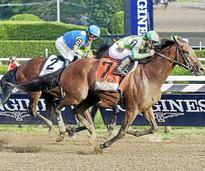
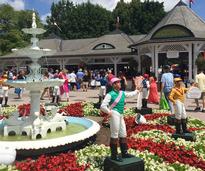
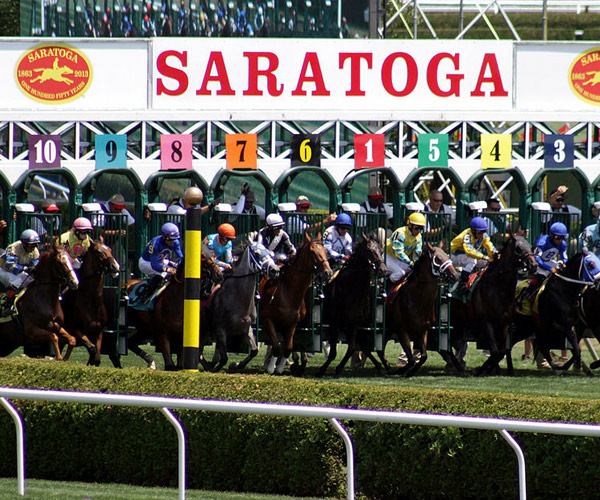
Let's use the Saratoga Race Course as our example:  the Saratoga meet takes place for six glorious weeks every year.  Six days a week--only Tuesdays are "dark"--the New York Racing Association puts on a show that features the world's most beautiful and gifted equine athletes.  If you spread out just the Saratoga meet by the schedule of a football team, the 36-day meet would take 36 weeks!  (And, lest you mistakenly think that the hard-working folks at NYRA only work that hard for only six weeks a year--uh, no.  Opening Day at Saratoga every year happens only a few days after the close of Belmont Park.  And after Labor Day, when the Saratoga meet ends--they go back to Belmont, and do it all over again.  Then Aqueduct.  Then Belmont.  Then Saratoga again.  NYRA puts on this show year-round, an amazing feat, indeed.)


Well.  Like football--or perhaps more so--racing is a very complicated sport.  It's not an endeavour for the frail-of-heart.   And I mean being a fan!  There's a lot to learn about handicapping and pedigree, for example.  (And don't worry--we intend to help you learn all those things here in Racing 101 over the next several weeks.)


But the first thing you need to learn--the thing that will help you have a blast on your first day, and inspire you to return day after day--the key element to enjoying a day at the races is--calm down...


If it takes a village to rear a human child, surely it takes an entire metropolis to get a Marion Photo Nummy Nums Cribbing.jpgThoroughbred to that first race.

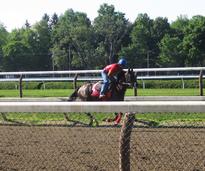
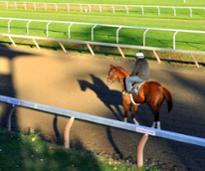
To the uninitiated, it looks to be a very simple concept:  Take a horse.  Throw a saddle on her back.  Throw a small person on the saddle on the horse's back.  Stick 'em on a racetrack, and open the gate.

Much easier said than done.

Let's start with the basics.  Now that we know how to identify a Thoroughbred, and how they differ from other breeds, let's look at the life of a horse, and how they go from being a wobbly-legged, deer-like infant to a big, strapping, muscular athlete.  And then we'll get that athlete into the world of horse racing.  It takes a lot of dedicated people, a ton of cash and a tremendous amount of commitment...

Leave a Comment

M.E. Altieri

THE ALPHA MARE, commonly known as M.E. Altieri, is a writer/editor/activist who lives and breathes the art and sport of horse racing—both Arabian and Thoroughbred.

In 19 -- (we're not sharing the year!), at age four, Mare first rode a horse—an American Quarter Horse—on her cousin's farm in Stephentown, New York. That same year her Mother took her to Green Mountain Park, a now- (sadly) defunct Thoroughbred track in Pownal, Vermont. Next stop, Saratoga Race Course. The seed was planted, and a passion, born.

While she does have other interests, none hold a candle to her passion for horses. She finds that horses are far-more intelligent, compassionate and kind than 99% of the people she meets.

Mare has just finished editing a beautiful history book, about Iraqi Purebred Arabians, and is eager for the western world to discover the book, its author and the history of this strain of the breed. Additionally, she contributes to several horse publications (racing and otherwise), including Arabian Finish Line, Desert Mirage and Galopp Magasinet. The Alpha Mare Series, a book series for children, will debut on Caballito Books.

An Alumna of Mount Holyoke College, Mare is a member of American Horse Publications, the Arabian Jockey Club and Arab Business Club. She invites you to read the blog—and to comment here in the Comments section. Become involved in the equine industry via whatever interests you most—and tell Mare about your passion for the horses, the people and the scene. In the words of the great Harvey Pack, Mare offers this benediction: "May the Horse be with you."


QUESTIONS?


Thoroughbred Racing in Saratoga

The Thoroughbred is a distinct, created breed of horse. Saratoga Springs, New York is a unique, pristine city in Upstate New York.

Put the two together, Thoroughbreds and Saratoga, and you have America's most prestigious, lushly beautiful and important racing meet. For six weeks every summer, the world's best horses, jockeys and trainers come together to compete for trophies, cash and fame.

In this blog, we'll discover All Things Thoroughbred and the lovely international community of horsepeople, both professionals and fans, alike who set up camp in this city. Some come for six weeks, only. Others are here from April through November every year, when the Oklahoma's open. Yet others trek to town to race their mighty steeds—then fall in love with the place; buy a home and move here.

The Saratoga racing family of humans and horses is a year-round endeavour. You think that all the horses all go elsewhere after Labor Day? Then this blog is for you, too.

(Is the reference, "the Oklahoma" lost on you? Stay tuned, you'll feel like a pro in no time.)

Welcome to the only experience on Earth that can boast of such otherworldly beauty and heart-stopping thrills, all in the same breath: Thoroughbred racing in Saratoga.