Addiction and substance use disorders know no boundaries. According to the most recent statistics, 16.8% of people age 12 and older — approximately 48.4 million individuals — experienced a substance use disorder (SUD) in the past year. This means addiction will affect the lives of many individuals and families across Saratoga and the Capital Region.
Whether it involves substance use disorder, alcohol dependence, or behavioral addiction, the journey to recovery is deeply personal — and it’s not one anyone should face alone. As a community, we all benefit when people struggling with addiction have access to comprehensive support, compassionate care, and tools that foster resilience, reduce stress, and promote overall well-being.
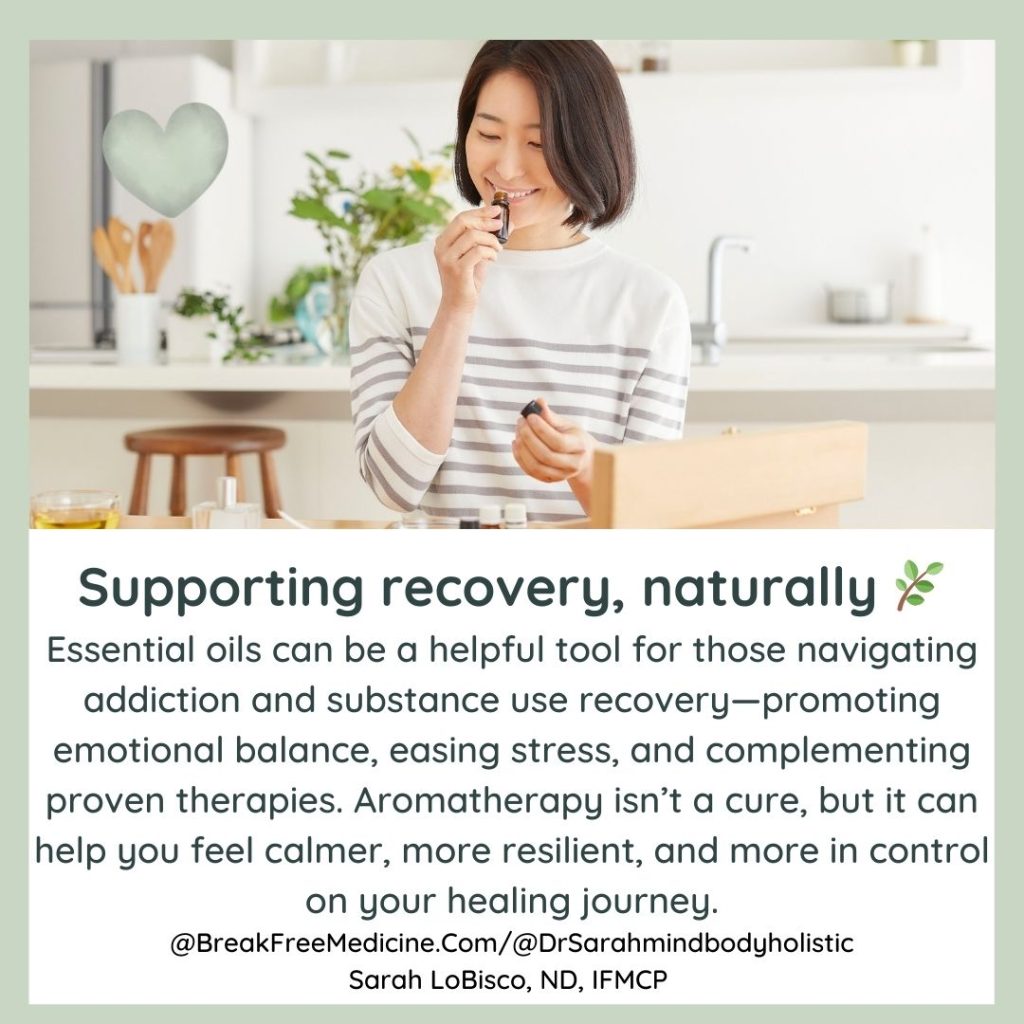
Recovery is about healing the whole person — body, mind, and spirit. While conventional treatments like counseling, medication‑assisted therapy, and support groups remain central, many people are also exploring complementary approaches that can support emotional regulation and stress management. One such approach that’s gaining attention is the use of essential oils as part of a holistic recovery plan.
Previously, I discussed how bergamot essential oil may support substance use disorder (SUD) recovery by enhancing emotional resilience and overall mental well-being. In the highlighted study, participants who inhaled bergamot oil three times daily for one week reported feeling calmer, along with reduced symptoms of depression, anxiety, and stress.
My latest video article expands on the current evidence surrounding essential oils and addiction, including animal studies, human trials, and proposed mechanisms of action. It provides a research-based foundation for understanding how specific oils may fit within an integrative approach to recovery.
📌 What the Full Article Covers
The article is organized into the following sections so readers can explore each topic in depth:
- Understanding Addiction, Neurobiology, and How Essential Oils Fit – An overview of how addiction affects the brain and where aromatherapy may intersect with emotional regulation pathways.
- Scientific Studies: Animal Research – Preclinical findings that suggest how certain essential oils may interact with neurological pathways relevant to addiction.
- Human Research & Clinical Observations – What small clinical trials and observational studies indicate about essential oils and substance-related symptoms.
- How Aromatherapy May Support SUD and Addiction Recovery – Practical examples of how specific oils (such as bergamot, lavender, and peppermint) may help with stress, mood, sleep, digestion, and withdrawal-related symptoms.
- Integrating Essential Oils into Recovery & Limitations – How I use essential oils in my practice to support mental health and a balanced discussion of what the research does — and does not — demonstrate about essential oils for recovery.
- Safety & Best Practices – Guidelines for safe and intentional use.
- Summary & FAQs – Key takeaways and answers to common questions.
👉 Read the full article: 🌿 Addiction and Essential Oils: Science, Evidence & Practical Insights
🌱 Why Community Support Matters
Addiction doesn’t happen in isolation, and recovery is most successful when supported holistically. In Saratoga, we have a strong network of treatment providers, peer support groups, mental health professionals, and wellness practitioners — all working to make recovery accessible and sustainable. Integrative tools like aromatherapy can be valuable in helping individuals:
- Reduce emotional intensity and stress
- Support engagement in therapy
- Improve sleep and relaxation
- Enhance resilience and motivation
These tools are not replacements for clinical care, but they can help bridge gaps in emotional regulation, stress response, and overall quality of life — areas that can make recovery more challenging when left unaddressed. This is especially true when they are used thoughtfully and under professional guidance.
🤝 Getting Help Is Important
If you or someone you love is navigating addiction, reaching out is the first step toward healing. Recovery is possible, and support is available — from medical professionals, therapists, support groups, and even community hubs right here in Saratoga. Complementary tools like essential oils can play a supportive role, but they work best when part of a broader recovery plan tailored to individual needs.
Ready to dive deeper into the science and practical insights?
👉 Read the full article: 🌿 Addiction and Essential Oils: Science, Evidence & Practical Insights
Together, we can build a supportive, informed community where recovery is welcomed, understood, and empowered — one step at a time. 🌟
📍Access Additional Addiction & Recovery Resources in Saratoga
- The Alcohol and Substance Abuse Prevention Council – Recovery advocacy and community support for reducing addiction stigma in Saratoga Springs
- Discover more articles for holistic wellness support
Interested in Learning More About Essential Oils?🌿✨
- Opt-in for my free weekly naturopathic and functional medicine wellness newsletter.
- Grab free resources and more education on essential oils and mind-body wellness here.
- For Health Care Providers: Earn CEU’s From My Course on the Clinical Applications of Essential Oils.
- Learn about my community membership program.
- Join my Essential Oils DIY Recipe Group (Facebook)
Disclaimer: This material is for information purposes only and is not intended to diagnose, treat, or prescribe for any illness. You should check with your doctor regarding implementing any new strategies into your wellness regime. These statements have not been evaluated by the FDA. (Affiliation link.)