There’s a certain stillness people come to Saratoga Springs for.
The mineral springs. The slower pace downtown. The feeling of stepping away — even briefly — from the constant noise and stimulation of everyday life.
And yet, even in a place that feels calming, many people notice something surprising:
they still don’t fully feel at ease.
Sleep feels light or interrupted.
Stress hangs on longer than it should.
Focus drifts.
Recovery takes more effort than it used to.
At first, it’s subtle — easy to dismiss as stress, being busy, or simply getting older.
But over time, those patterns become harder to ignore.
🧠 The Nervous System Behind That Feeling
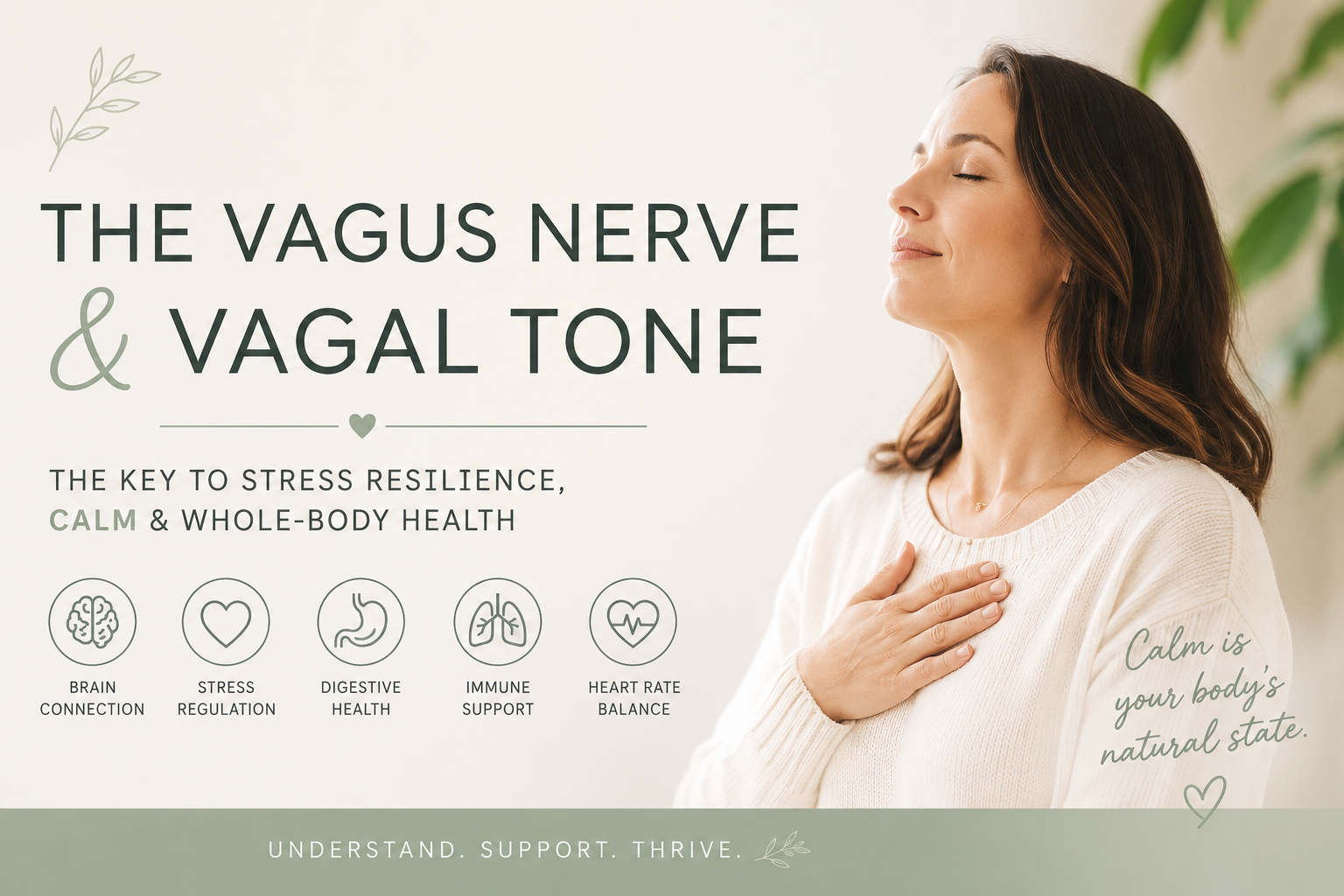
At the center of this experience is a communication pathway many people have heard of, but rarely understand in context: the vagus nerve.
This tenth cranial nerve plays a key role in how the body shifts between activation and recovery — between doing and restoring.
When it is functioning optimally, there’s a sense of internal rhythm and adaptability. We are able to experience life’s stressors and recover from them sufficiently.
Yet, when the vagus nerve is triggered and under strain, the mind and body can feel like it never completely “switches off.” As a result, we aren’t able to relax entirely, even in moments that should feel restorative.
Over time, the cumulative stressors of our lives can lead to poor vagal tone with the following symptoms:
Digestive sensitivity or unpredictability
Slower recovery after stressful or emotional events
A sense of low resilience or feeling easily depleted
Sleep that doesn’t feel fully restorative
A general feeling of being “off” physiologically
That “wired but tired” state
Emotional reactivity that is out of proportion
Mental fog or overstimulation
Oftentimes, these symptoms go unnoticed until they accumulate and become chronic.
🌬️ What the Body Responds to Most
One of the most important clinical insights to understand is that the nervous system responds poorly to pushing through and more effort. Rather it is restored by cues of safety, rhythm, and predictability.
These include:
• Intentional breathing and pausing
• Environments without loud sensory input
• Movement that restores rather than depletes
• Connection that feels grounding, not overstimulating
• Calming the mind-body through the senses (i.e., aromatherapy)
These inputs provide a soothing response by the vagus nerve, which then communicates to the body that can recover and rest.
📖 Read the Full Article
To go deeper into this framework—including how vagal tone works, what influences it, and how it connects to resilience and emotional regulation—you can access my updated video blog:
It expands on:
- What vagal tone actually reflects physiologically
- Signs the system may be under strain
- How brain–body communication shapes mood, energy, and clarity
- How to begin supporting regulation in practical ways using the foundations of health and holistic modalities
🧩 A Systems Perspective
Symptoms like fatigue, cognitive changes, and stress sensitivity often appear unrelated on the surface.
But digging deeper, there is continuous integration between stress physiology, emotional processing, immune signaling, and metabolic demand.
As this load accumulates, the nervous system organizes itself differently in response.
Thankfully, there are integrative approaches that can provide us with tools to reset our mind-body and support our vagus nerve.
🧠 A Broader, Integrative Approach to Enhance Brain–Body Communication
While the vagus nerve plays an important role, it exists within a much larger network of brain–body communication.
Stress physiology, emotional processing, inflammation, physiological imbalances, and metabolic load all interact to shape how the nervous system organizes itself over time.
While we cannot remove every stressor, we can assist how the brain and body adapt and respond to them. Enhancing vagal tone is a start, but we need a more integrative approach.
This is the foundation of the Brain Health Reset Program.
It provides practical education, guided exercises, sensory tools, and live interaction so you can support your brain and nervous system naturally while building sustainable habits for long-term well-being.
Learn more here. Spaces are limited.
🌲 Saratoga Wellness Resources
Support nervous system balance and cognitive resilience locally. Explore Saratoga’s wellness-focused resources, movement spaces, outdoor environments, and integrative health community here:
- Enjoy these peaceful activities as ways to unwind around Saratoga
- Experience Saratoga’s mineral baths and spa services
- Revitalize with the many services at the Roosevelt Baths & Spa
- Visit the healing mineral springs of Saratoga.
- Emerge yourself in nature along Saratoga’s hiking trails
- Discover the Saratoga State Spa Park’s biking and walking trails
💌 Stay Connected
If you enjoy exploring topics related to brain health, nervous system regulation, essential oils, and integrative wellness, you can subscribe to my newsletter for future articles, research updates, and upcoming educational resources, including the Brain Health Reset Program. More details here.
Disclaimer: This material is for information purposes only and is not intended to diagnose, treat, or prescribe for any illness. You should check with your doctor regarding implementing any new strategies into your wellness regime. These statements have not been evaluated by the FDA. (Affiliation link.)