Saratoga.com logo
Saratoga.com logo
  • Places to Stay
  • Things To Do
  • Food & Drink
  • Events
  • Businesses
  • Travel Guides
Saratoga Business Journal
  • Home
  • New Businesses
  • Business News
  • Business Reports
  • Business Briefs
  • Business Registrations
  • Personnel Briefs
  • Contact Us

Category Archives: Financial Planning / Investments

HK Wealth Management Expands Client Base In Capital Region, Washington County

Posted onJune 22, 2026
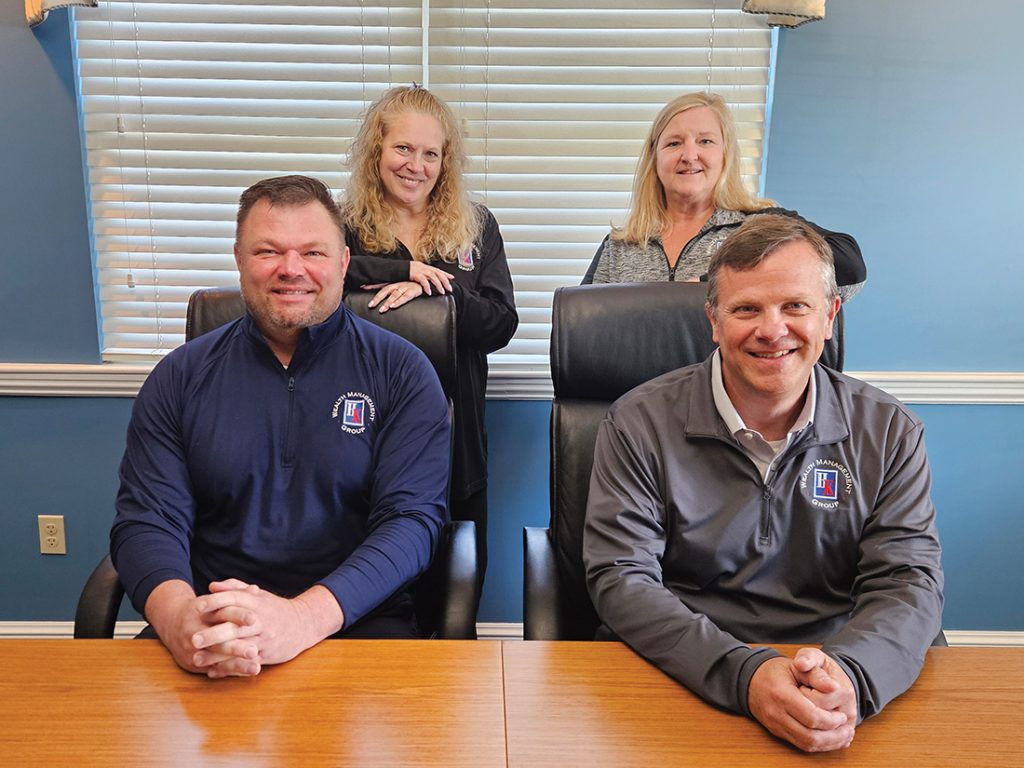
From left, seated, Joel Bennett and Kevin Hedley join standing team members Shelly DeCicco and Jennifer Casey as HK Wealth Management Group expands in the Capital Region and Washington County.
Courtesy HK Wealth Management

By Rod Bacon

Earlier this year, HK Wealth Management Group, headquartered in Clifton Park, expanded its reach with the acquisition of two area financial advisors.

Burnt Hills Financial and Wilbur Financial Group of Greenwich were brought into the HK family. The client base from both practices and some physical assets in Greenwich were purchased.

Burnt Hills Financial was founded in 2016 by Thomas Lansing Jr., while Wilbur Financial Group was established in 2005 by Larry J. Wilbur. According to Kevin M. Hedley, MS, CPA, PFS, HK’s founder and principal adviser, the acquisition of these firms is a good fit because they all use the same broker-dealer and money managers, so the transition has been seamless.

“This acquisition allows us to continue serving more individuals and families throughout the region while maintaining a local presence,” he said. “It also enables clients to benefit from the resources of our broker-dealer partners and leading asset management platforms such as AssetMark. As one of AssetMark’s higher-tier firms we are able to provide a broader ranger of planning and investment solutions than may have previously been available.”

Read More

Saratoga Private Wealth Focuses On Communication, Planning And Growth

Posted onJune 22, 2026
Harrison Xu and Joseph Vidarte, founders of Saratoga Private Wealth, lead the Saratoga Springs firm with a focus on active communication, coordinated planning and long-term client relationships.
Courtesy Saratoga Private Wealth

By Staff Writer

When Harrison Xu and Joseph Vidarte launched Saratoga Private Wealth in Saratoga Springs in November 2025, their goal was not simply to establish another wealth management firm.

Instead, they set out to build a business centered on greater client engagement, active communication and a more coordinated approach to financial planning.

Based at 229 Washington St., Saratoga Private Wealth provides investment management, retirement planning and wealth preservation services for individuals and families. Xu is president of the firm, while Vidarte is vice president and partner.

Their launch reflects a broader movement within the financial advisory industry. Over the past decade, many experienced advisers have chosen to establish independent firms, citing greater flexibility in client service, technology selection and long-term planning strategies. At the same time, clients increasingly seek more personal guidance and ongoing communication rather than periodic portfolio reviews.

Read More

Business Report: Should you trust a ‘finfluencer’?

Posted onJune 23, 2025
Eric Snell, financial advisor with Edward Jones Financial in Saratoga Springs.
Courtesy Edward Jones

Provided By Eric Snell

In the age of social media, it’s easy to find advice on just about anything — including how to manage your money. Content creators known as “finfluencers” — short for financial influencers — use platforms like TikTok, YouTube and Instagram to share their takes on investing, budgeting and building wealth. Many of them are charismatic and relatable, and they often speak from personal experience. But while their content may be engaging, taking financial advice from a finfluencer without digging deeper can come with significant risks.

While some finfluencers may have formal training or credentials, many do not. Instead, their influence stems from their popularity rather than professional experience. But popular advice may not necessarily be good advice. A 2025 study by the Swiss Finance Institute even found that unskilled finfluencers typically have larger followings than skilled ones.

Why be cautious?

For young or new investors, social media can make finance feel accessible. In fact, a 2022 FINRA study says that more than 60% of Americans younger than 35 get investing information from these platforms. But social media isn’t regulated the same way traditional financial advising is, so anyone, qualified or not, can offer financial tips.

Unlike traditional financial advisors, finfluencers don’t know your unique goals, financial situation or risk tolerance. And likely, they’re not licensed (you can check here: Check Out Your Investment Professional | Investor.gov). Even well-meaning guidance might lead you down a risky path if it’s not tailored to your needs. And unfortunately, some finfluencers have exploited the trust they build with followers to promote questionable investments or outright frauds.

Read More

Workers Benefit Significantly From Employee Stock Ownership Program At Stewart’s Shops

Posted onJune 6, 2024

By Christine Graf

If you’ve visited your local Stewart’s Shops lately, you may have been waited on by a millionaire. Thanks to the company’s Employee Stock Ownership Plan (ESOP), a significant number of employees have become millionaires. 

Nationwide, only about 6,300 companies offer ESOPs, employee benefit plans that give workers ownership interest in their company in the form of shares of stock. Stewart’s Shop is one of just a handful of local businesses to offer this benefit to its employees. 

“ESOP programs have been getting a lot more attention from leaders in the state and other businesses,” said Robin Cooper, public relations manager for Stewart’s Shops. “I’m only aware of four or five companies in the region that have them.”

At Stewarts, both full- and part-time employees ages 19 and up are eligible to enroll. A person must work 500 hours in a quarter or 1,000 hours in a year, whichever occurs first. After a period of six years, the employee is fully vested. At that point in time, the balance of his or her ESOP is equivalent to approximately one year’s salary.  

In 2022, Stewart’s Shops made $19 million in contributions to the ESOP accounts of 3,000 active employees, each one receiving the equivalent of 16 percent of his or her annual salary. That year, ESOP participants saw their account balances grow by 12.5 percent compared to the previous year. 

The Stewart’s ESOP was established in 2001, and employees now own 40 percent of the privately-held company. The plan is 100 percent company paid.

“We have also been paying dividends for about the past ten years,” said Alison Abbey, personnel manager for Stewart’s Shops. “Those are paid quarterly. People can take them as cash or roll them into their balance.”

Abbey estimates that approximately 40 percent of employees choose cash payouts on dividends.

Read More

Business Report: Keys To A Successful Client-Advisor Partnership

Posted onJune 6, 2024
Peter Capozzola, CFA,Vice President/Senior Investment Officer, Capital Bank.
Courtesy of Capital Bank

By Peter Capozzola, CFA

At our house, I stay away from any projects having anything to do with electricity; or anything that can result in a flooded basement or in a tree crashing through our roof.  Sure, I can look up a YouTube video for advice, but for me DIY has its limits.  I’m better off hiring someone who has the professional experience and skills in these fields and is hard wired in ways I am not.  

When it comes to investing, people can take the DIY approach and even find tutorials on YouTube (you may want to skip past the “Roaring Kitty” GameStop Meme). Beyond that, the advice offered can be like pieces of a puzzle; incomplete, and from which it is impossible to grasp the full picture. Worse, the information may simply not be applicable to your goals and circumstances, so it is not the solid foundation on which you would want and need to build a plan for your future.  

Managing investments is what an investment manager does day-in day-out, year-in year-out.  It is a profession they are committed to, and this is how they are hard wired. To us, the keys are an informed approach; executing a disciplined process; having the right people on our team; and focusing on capital preservation by striking a balance between risk and reward and seeking a margin of safety when investing.   

There are five key elements to a successful client-advisor partnership: an informed plan; an appropriate strategic asset allocation; opportunistic tactical allocation, diversification, and ongoing communication with clients.  

What informs an investment plan is not so much the markets or numbers, but what matters to you. Any discussion should include a review of your cash needs, time horizon, tolerance for risk, investment return goal, tax impacts and your unique circumstances. Each of these factors should be considered when determining an appropriate investment path for you.

That investment path begins with a “strategic allocation” that lays out the appropriate mix of cash, bonds and stocks, taking into account the historical returns and risks of the markets over the long run, which is suited to meet your particular goals. Keep in mind that as your circumstances change, your investment path and strategic allocation will likely change as well.

Read More

NBT Bancorp Inc. Promotes Four Executives As It Implements It’s CEO Succession Plan

Posted onJune 6, 2024

NBT Bancorp Inc.  has announced that its CEO Succession Plan unanimously approved by NBT’s board of directors in January was executed with Scott A. Kingsley succeeding John H. Watt, Jr. as NBT’s 15th president and chief executive officer. Kingsley was also elected to NBT’s board of directors. Watt will continue to serve on the board and has been named vice chairman.

NBT also announced the promotion of Joseph R. Stagliano to president of NBT Bank, N.A., the company’s wholly-owned banking subsidiary, Annette L. Burns to executive vice president and chief financial officer, and Shauna M. Hyle to executive vice president, retail community banking.

NBT Board Chairman Martin A. Dietrich said, “Smooth leadership transitions are a characteristic of high-performing companies. The board enthusiastically and unanimously approved the succession plan we announced in January. We thank John for the vision and energy he has invested in NBT, and we are fortunate to have a tested and aligned executive management team with strong and experienced leaders like Scott, Joe, Annette and Shauna.”

Kingsley joined NBT in 2021 as executive vice president and chief  financial officer. He has more than 35 years of experience, including 16 years as a member of the management team at Community Bank System, Inc., where he served as chief operating officer and, prior to that, as chief financial officer. Kingsley started his career with PricewaterhouseCoopers, LLP before joining the Carlisle Companies, Inc., a publicly traded global manufacturer and distributor, where he served in financial and operational leadership roles. 

A certified public accountant, Kingsley earned his bachelor’s degree in accounting from Clarkson University. He is an active community advocate, volunteer and fund-raiser. He currently serves on the Crouse Health Foundation board of trustees and the audit and finance committee for the Catholic Diocese of Syracuse and was previously chair of the board of directors of the Food Bank of Central New York.

Read More

Talent Triage

Posted onJune 6, 2024

By Renee Walrath, President & CEO Recruiting in the healthcare industry has continuously been a struggle, which was only magnified by the pandemic.  Hospital staff are on the front lines battling the demands for services with the lack of a skilled workforce. There have been unprecedented levels of turnover within the field. Healthcare professionals...

Read More

AARP Report: Two-Thirds Of Adults In U.S. Believe Consumer Fraud Is At A Crisis Level

Posted onJune 12, 2023

Two-thirds of adults in the United States believe fraud has hit a crisis level, according to a new AARP Fraud Watch Network report.

The report also highlights the methods criminals use to steal money, such as cryptocurrency, gift cards and peer-to-peer payment apps. The findings suggest the need for Americans to share what they know about scams with their friends and family.  

“Financial predators use a playbook to get us into a heightened emotional state,” said Kathy Stokes, AARP director of fraud prevention programs. “They know it’s hard to access our logical thinking when we are panicked, excited or scared. But knowing about specific scams makes it far less likely that we will engage with them.”  

Criminals often turn to atypical payment options in their scams like gift cards, peer-to-peer payment apps and cryptocurrency, because these forms of payment are processed quickly and cannot be reversed.

The AARP report showed one third of adults do not know it is a scam when someone directs you to use a cryptocurrency ATM to address some financial concern. In 2022 alone, the FBI says reported losses from fraud involving cryptocurrency reached $2.57 billion, a 183 percent increase from the previous year.

Read More

Business Report: What Investors Can—And Can’t—Control

Posted onJune 13, 2022
Robert Snell, financial adviser with Edward Jones Financial in Saratoga Springs.

As an investor, you can easily feel frustrated to see short-term drops in your investment statements. But while you cannot control the market, you may find it helpful to review the factors you can control.

Many forces affect the financial markets, including geopolitical events, corporate profits and interest rate movements – forces beyond the control of most individual investors.

In any case, it’s important to focus on the things you can control, such as these:

• Your ability to define your goals. One area in which you have total control is your ability to define your goals. Like most people, you probably have short-term goals—such as saving for a new car or a dream vacation—and long-term ones, such as a comfortable retirement. Once you identify your goals and estimate how much they will cost, you can create an investment strategy to help achieve them. 

Over time, some of your personal circumstances will likely change, so you’ll want to review your time horizon and risk tolerance on a regular basis, adjusting your strategy when appropriate. And the same is true for your goals. They may evolve over time, requiring new responses from you in how you invest.

• Your response to market downturns. When the market drops and the value of your investments declines, you might be tempted to take immediate action in an effort to stop the losses. This is understandable. After all, your investment results can have a big impact on your future. However, acting hastily could work against you. 

Read More

Business Report: Pros And Cons Of Alternate Investments

Posted onJune 13, 2022
David L. Cumming, senior vice president and financial advisor at Morgan Stanley.

By David Cumming, CFP, RICP, CRPS

In today’s dynamic market environment, some investors may be looking beyond stocks and bonds for other options for investing their money. This search for other options may lead to alternative investments. 

Alternative investments are investments outside the stock and bond markets, and may include real estate, private equity, hedge funds, digital assets, and may include investments offering to these financial instruments such as cryptocurrencies, commodities, precious metals and art or collectibles. 

These types of investments tend not to be correlated to the performance of stocks and bonds, and may offer the potential for higher returns, but typically with higher risk.

Here is an overview of what you need to know before investing.

Potential upsides of alternative investments:

• Potential reduction in overall volatility. Since their performance are historically low to moderate correlation with market indices, alternative investments may help to reduce overall volatility within a portfolio of traditional investments.

• Diversification. Alternative investments typically help provide diversification across different markets, strategies, managers and investment styles.

• Potential for increased performance. Like any investment, the rate of return for alternative investments is not guaranteed. However, according to a study called “The Rate of Return on Everything, 1870-2015,” which looked at performance across 16 advanced economies over a period of 145 years, residential real estate provided the best returns.

Read More

Posts pagination

1 2 3 4 Next
Subscribe to Our Newsletter View the Latest Virtual Edition

Categories

  • 50-Plus
  • Banking
  • Banking / Asset Managment
  • Building Trades
  • Business Briefs
  • Business News
  • Business Registrations
  • Business Reports
  • Commercial / Residential Real Estate
  • Community Services
  • Construction
  • Construction Planning
  • Corporate Tax / Business Planning
  • Cyber / Tech
  • Dining Guide
  • Economic Development
  • Economic Outlook 2016
  • Economic Outlook 2017
  • Economic Outlook 2018
  • Economic Outlook 2019
  • Economic Outlook 2020
  • Economic Outlook 2022
  • Economic Outlook 2023
  • Economic Outlook 2024
  • Economic Outlook 2025
  • Economic Outlook 2026
  • Education/ Training/ Personal Development
  • Entrepreneurial Women
  • Entrepreneurship
  • Environment / Development
  • Financial Planning / Investments
  • Fitness / Nutrition
  • Health / Community Services
  • Health & Fitness
  • Health & Wellness
  • Healthcare
  • Holiday Guide
  • Holiday Shopping
  • Home / Energy
  • Home / Insurance
  • Home & Real Esate
  • Insurance / Employee Benefits
  • Insurance / Medical Services
  • Leadership Development
  • Legal / Accounting
  • Meet The Chef
  • New Businesses
  • Non-Profit
  • Office / Computer / New Media
  • Office / HR / Employment
  • Office/ Technology/ E-Commerce
  • Outlook 2021
  • Personnel Briefs
  • Retirement Planning
  • Senior Living / Retirement
  • Summer Construction
  • Uncategorized
  • Wellness
  • Women In Business
  • Workplace / Security / Legal
  • Year-End Tax Planning

Archives

  • June 2026
  • May 2026
  • April 2026
  • March 2026
  • February 2026
  • January 2026
  • December 2025
  • November 2025
  • October 2025
  • September 2025
  • August 2025
  • July 2025
  • June 2025
  • May 2025
  • April 2025
  • March 2025
  • February 2025
  • January 2025
  • December 2024
  • November 2024
  • October 2024
  • September 2024
  • August 2024
  • July 2024
  • June 2024
  • May 2024
  • April 2024
  • March 2024
  • February 2024
  • January 2024
  • December 2023
  • November 2023
  • October 2023
  • September 2023
  • August 2023
  • July 2023
  • June 2023
  • May 2023
  • April 2023
  • March 2023
  • February 2023
  • January 2023
  • December 2022
  • November 2022
  • October 2022
  • September 2022
  • August 2022
  • July 2022
  • June 2022
  • May 2022
  • April 2022
  • March 2022
  • February 2022
  • January 2022
  • December 2021
  • November 2021
  • October 2021
  • September 2021
  • August 2021
  • July 2021
  • June 2021
  • May 2021
  • April 2021
  • March 2021
  • February 2021
  • January 2021
  • December 2020
  • November 2020
  • October 2020
  • September 2020
  • August 2020
  • July 2020
  • June 2020
  • May 2020
  • April 2020
  • March 2020
  • February 2020
  • January 2020
  • December 2019
  • November 2019
  • October 2019
  • September 2019
  • August 2019
  • July 2019
  • June 2019
  • May 2019
  • April 2019
  • March 2019
  • February 2019
  • January 2019
  • December 2018
  • November 2018
  • October 2018
  • September 2018
  • August 2018
  • July 2018
  • June 2018
  • May 2018
  • April 2018
  • March 2018
  • February 2018
  • January 2018
  • December 2017
  • November 2017
  • October 2017
  • September 2017
  • August 2017
  • July 2017
  • June 2017
  • May 2017
  • April 2017
  • March 2017
  • February 2017
  • January 2017
  • December 2016
  • November 2016
  • October 2016
  • September 2016
  • August 2016
  • July 2016
  • June 2016
  • May 2016
  • April 2016
  • March 2016
  • February 2016
  • January 2016
  • December 2015
  • November 2015
  • October 2015
  • September 2015
  • August 2015
  • July 2015
  • June 2015
  • May 2015
  • April 2015
  • March 2015
  • February 2015
  • January 2015
  • December 2014
  • November 2014
  • October 2014
  • September 2014
  • August 2014
  • July 2014
  • June 2014
  • May 2014
  • April 2014
  • March 2014
  • February 2014
  • January 2014
  • December 2013
  • November 2013
  • October 2013
  • September 2013
  • August 2013
  • July 2013
  • June 2013
  • May 2013
  • April 2013
  • March 2013
  • February 2013
  • January 2013
  • December 2012
Connect With Us

Follow, like and subscribe to Saratoga.com on social media

Account Sign In Submit An Event
Saratoga.com logo
  • Home
  • Places To Stay
  • Things To Do
  • Food & Drink
  • Events
  • Real Estate
  • Businesses
  • Guides
  • Contact Us
  • Blogs
  • Sweepstakes
  • Advertising
Visit Saratoga.com For Everything Saratoga
Full-Service Internet Marketing: Search Engine Optimization, Website Design and Development by Mannix Marketing, Inc.
Mannix Marketing, Inc. is headquartered near Saratoga Springs in Glens Falls, New York
Saratoga.com All Rights Reserved © 2026
Disclaimer & Privacy Policy / Terms of Use / Copyright Policies
[uc-privacysettings]

We strive to insure accuracy on Saratoga.com however accuracy cannot be guaranteed. Information is subject to change.
Please alert us if there is any inaccurate information here.

Having trouble using this site? Accessibility is our goal, please contact us with site improvements.