
Courtesy StoredTech
By Carol Ann Conover
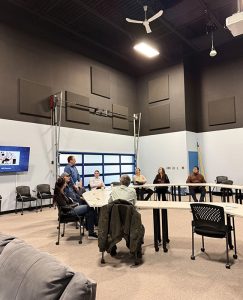
StoredTech, a managed IT and cybersecurity firm, capped off the spring semester by hosting cybersecurity students from SUNY Adirondack in late May for a hands-on look at how artificial intelligence is reshaping day-to-day work in the technology field and the career paths now opening because of it.
The visit came together, fittingly, through an unplanned encounter. “Interestingly, the connection started through a conversation during a DoorDash delivery,” said David Andrade, StoredTech’s president. “It’s a great reminder that in a close-knit community, opportunities often come from unexpected places. We saw this as a great chance to connect students, see the many pathways available in the technology field.”
During the visit, StoredTech staff led students through a live demonstration of the platform the company uses to support its clients, including a walkthrough of how a support ticket is completed and how the company gathers and analyzes data for client reporting. The students’ reaction stood out to the StoredTech team members who participated.
Staff also spent time with students discussing how AI is changing the way StoredTech’s teams work and how that shift will shape the jobs those students are training for. The team shared practical tips on prompting, providing context and adapting to this new way of working, lessons that Zac Barber, a pre-sales engineer at StoredTech, described simply. “The most value in AI comes from the context you give it,” Barber said. “The more clearly you explain what you need, the better results you get.”
That shift is already creating jobs that did not exist recently, StoredTech said, describing it as a fast-growing area within managed service providers and other technology organizations as AI adoption accelerates. Roles focused on building structured playbooks, standard operating procedures and decision logic to guide AI systems are among the positions that have emerged within the past six months.
Andrade said that pace of change is central to how StoredTech develops its own workforce. “We’re focused on helping our employees continuously learn and build new skills so they can grow alongside these changes,” he said. “Some of the most exciting opportunities in technology today didn’t exist a year ago. We’re creating new ways of working, including developing playbooks, SOPs and decision logic that helps guide AI to operate within our systems and enable our teams to work smarter and faster.”
Those systems are also opening new internal career paths at StoredTech. Employees who started as level 1 engineers, or even in coordinator roles without an IT background, now have a route into positions such as AI solutions architect or business process analyst, jobs built around the same AI-driven tools students saw firsthand during the visit. StoredTech staff who participated said they understood exactly what the students were feeling because many of them started in similar entry-level roles.
StoredTech leaders said they hope the visit is the first of many with SUNY Adirondack. “Absolutely,” said Aleks Pavlinik, StoredTech’s chief information security officer, when asked whether the collaboration would continue. “Building connections between education and industry is important for developing the next generation of professionals. Our industry needs curious minds who are willing to learn, adapt and solve problems. We’d love to continue partnering with SUNY Adirondack through hands-on learning experiences that help students prepare for careers in the field.”
Pavlinik pointed to the asymmetry that defines cybersecurity work as a reason that mindset matters so much in the field. “The threat actors only have to get it right once,” he said. “The defenders, us, need to get it right every time.”
Michael Hatalla, StoredTech’s director of information technology, said the same quality that helps students succeed in the classroom will serve them well as the field keeps shifting under their feet. “What’s most important in this field is lifelong curiosity and a willingness to keep learning,” Hatalla said. “Technology is always changing, so the people who grow the most are the ones who stay curious and adapt.”