Recently in Racing 101 Category
Like most experiences in life, if you try something once and it isn't pleasant--you're not eager to try it again. A day at the races is a wonderful, magical experience--if you have a little heads-up about activities and events. It can be very confusing to step foot onto the grounds of a Thoroughbred racetrack for the first time--and we want to alleviate some of that angst, right out of the gate.
Now, the first thing you should understand is that, in the world of Thoroughbred racing--every single day of a race meet is a Major Sporting Event.
Unlike other major sports--say, football or baseball--the meet at a racetrack is a daily event (or nearly daily) for an extended period of time. A football team may have a game once a week during their season. Not so with Thoroughbred racing! Consider this: racing happens somewhere in the United States 364 days a year. To my knowledge, there's no Christmas racing.
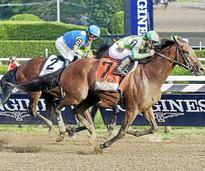
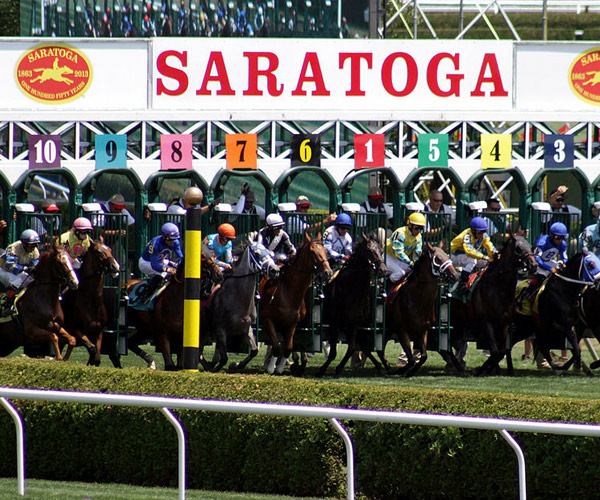
Let's use the Saratoga Race Course as our example: the Saratoga meet takes place for six glorious weeks every year. Six days a week--only Tuesdays are "dark"--the New York Racing Association puts on a show that features the world's most beautiful and gifted equine athletes. If you spread out just the Saratoga meet by the schedule of a football team, the 36-day meet would take 36 weeks! (And, lest you mistakenly think that the hard-working folks at NYRA only work that hard for only six weeks a year--uh, no. Opening Day at Saratoga every year happens only a few days after the close of Belmont Park. And after Labor Day, when the Saratoga meet ends--they go back to Belmont, and do it all over again. Then Aqueduct. Then Belmont. Then Saratoga again. NYRA puts on this show year-round, an amazing feat, indeed.)
Well. Like football--or perhaps more so--racing is a very complicated sport. It's not an endeavour for the frail-of-heart. And I mean being a fan! There's a lot to learn about handicapping and pedigree, for example. (And don't worry--we intend to help you learn all those things here in Racing 101 over the next several weeks.)
But the first thing you need to learn--the thing that will help you have a blast on your first day, and inspire you to return day after day--the key element to enjoying a day at the races is--calm down...
If it takes a village to rear a human child, surely it takes an entire metropolis to get a
Thoroughbred to that first race.
To the uninitiated, it looks to be a very simple concept: Take a horse. Throw a saddle on her back. Throw a small person on the saddle on the horse's back. Stick 'em on a racetrack, and open the gate.
Much easier said than done.
Let's start with the basics. Now that we know how to identify a Thoroughbred, and how they differ from other breeds, let's look at the life of a horse, and how they go from being a wobbly-legged, deer-like infant to a big, strapping, muscular athlete. And then we'll get that athlete into the world of horse racing. It takes a lot of dedicated people, a ton of cash and a tremendous amount of commitment...
Introduction Racing is the oldest sport in America, and surely, the most beautiful. Those of us who love the sport are fans for life. We hope to pique your interest, so you can join us in this exhilarating endeavour and become part of our community of fans and professionals. Hence, Racing 101. This course is designed to help those of you who may be fascinated by the sport of horse racing, but have not-yet experienced the thrill and majesty of it all. Or you've gone to a racetrack, and immediately felt lost and confused. We want to help you overcome those feelings! Week-by-week, we'll explore terms, strategies and factoids that will help you feel like a pro in no time. You may already be an experienced fan--this course is still for you! Your comments can help our "students" learn: Please feel free to write in and become involved. As we all learn more about the sport and bring others into the fold, the sport will grow.
Follow the lead of our magnificent Thoroughbreds, and remember to Run Fast, Turn Left--and never, ever give up.
|
|
Leave a Comment
|
Recent Comments